
Moving heavy equipment between construction sites requires far more than simply loading machinery onto a trailer. Excavators, loaders, cranes, rollers, and other large assets must be transported carefully to minimize safety risks, prevent costly delays, and comply with transport regulations. Proper planning protects valuable equipment while helping projects stay on schedule.
Construction companies that develop a structured transport strategy are better positioned to reduce downtime, improve efficiency, and avoid unexpected complications during relocation. Every stage of the process, from route planning to unloading, plays an important role in ensuring a safe and successful move.
Whether equipment is being transferred across a city or between states, preparation remains the key to minimizing risk.
Start With A Detailed Transport Plan

Before moving heavy equipment, project managers should learn more about machinery transport interstate to understand the planning required for long-distance relocations. Interstate transport often involves additional logistical considerations, including route selection, permit requirements, vehicle dimensions, and delivery scheduling.
A detailed transport plan should identify the equipment being moved, confirm its weight and dimensions, assess loading requirements, and determine the safest travel route. Site managers should also evaluate weather conditions, road restrictions, bridge clearances, and any obstacles that could affect the journey.
Planning ahead allows transport providers and construction teams to coordinate schedules, reduce delays, and ensure that equipment arrives when it is needed on site.
A well-organized transport plan is one of the most effective ways to improve both safety and operational efficiency.
Prepare Equipment Before Loading
Heavy machinery should always be thoroughly inspected before transport begins. Operators should check for leaks, damaged components, loose attachments, and any maintenance issues that could create problems during loading or unloading.
Whenever possible, buckets, blades, booms, and other movable parts should be secured according to manufacturer recommendations. Removing unnecessary attachments can reduce transport height and improve stability throughout the journey.
Loading should only be performed using suitable ramps, trailers, and tie-down equipment that meet relevant safety standards. Experienced operators and transport personnel should work together to ensure machinery is positioned correctly and properly restrained before departure.
Taking time to prepare equipment carefully helps reduce the risk of movement, damage, or accidents during transport.
Focus On Communication And Site Safety
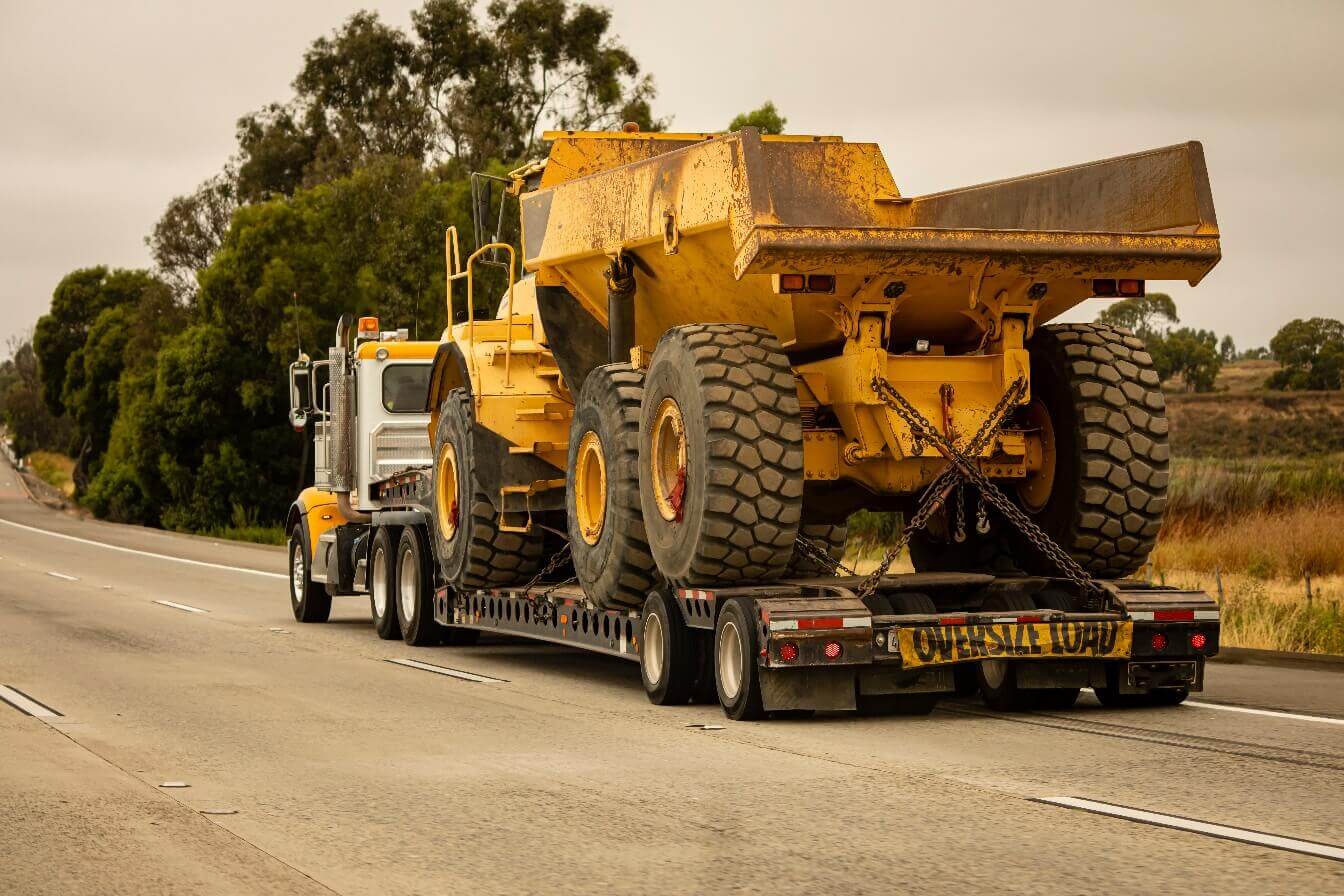
Successful equipment relocation depends on clear communication between construction managers, transport companies, equipment operators, and receiving site personnel. Everyone involved should understand delivery schedules, unloading procedures, and site access requirements before the machinery arrives.
Receiving sites should be prepared with stable unloading areas, adequate space for transport vehicles, and designated personnel to guide the process safely. Traffic management plans may also be necessary where construction activities continue during equipment delivery.
After unloading, machinery should undergo another inspection before returning to service. Identifying any transport-related issues early helps maintain safe operation and minimizes unexpected downtime.
Consistent communication throughout the relocation process helps improve coordination while reducing the likelihood of costly disruptions.
Conclusion
Transporting heavy construction equipment safely requires careful preparation, experienced operators, and detailed logistical planning. From selecting appropriate transport methods to securing machinery correctly and preparing the destination site, every step contributes to a safer and more efficient relocation.
By investing time in planning and working with experienced transport professionals, construction companies can protect valuable equipment, improve project efficiency, and reduce safety risks during every move. A proactive approach to machinery transport supports smoother operations and helps keep construction projects running on schedule.